
Inside Access
JVIR
Interventional Oncology
IR Quarterly
By Julie C. Bulman, MD, RPVI
Q: What is the appropriate way to report cryoneurolysis for the control of pain related to truncal or peripheral nerve pathologies?
Code family 64600-64681 describes its procedures as destruction of specified nerves by “chemical, thermal, electrical or radiofrequency.” Despite this, the American Medical Association (AMA) created the 0440T-0442T category 3 codes in 2015 to describe the use of a thermal technology (i.e., cryoablation) to perform denervation within the upper extremity (0440T), lower extremity (0441T) or trunk (0442T).
A: The 0440T-0442T codes were created specifically to describe cryoablation of nerves, (ablation, percutaneous, cryoablation, includes imaging guidance). The 64600-64681 family of codes do not adequately capture the physician work required to accomplish cryoneurolysis of peripheral or truncal nerves. Therefore, the AMA CPT panel agreed to the creation of these separate category 3 codes to report the image-guided targeting and cryoneurolysis of deep nervous structures described. These procedures typically require CT guidance given the anatomical deep location of the nerves. It is believed there is increasing adoption of image-guided cryoneurolysis since 2015.
The goal of a category 3 code is to collect utilization data and improve the literature base around the procedure with the goal of converting to Category 1 status. However, the continued inappropriate coding of percutaneous cryoneurolysis with the 646XX family codes has made it difficult to support this conversion as utilization of 0440T-0442T is perceived to be low. It is required to report 0440T-0442T when performing image-guided cryoneurolysis of the peripheral or truncal nerves. 0440T is used when treating upper extremity nerves, 0441T when treating lower extremity nerves, and 0442T when treating truncal nerves (including the brachial plexus).
Disclaimer: SIR is providing this billing and coding guide for educational and information purposes only. It is not intended to provide legal, medical or any other kind of advice. The guide is meant to be an adjunct to the American Medical Association’s (AMA’s) Current Procedural Terminology (2026/CPT®). It is not comprehensive and does not replace CPT®. Our intent is to assist physicians, business managers and coders. Therefore, a precise knowledge of the definitions of the CPT® descriptors and the appropriate services associated with each code is mandatory for proper coding of physician service. Please refer to 2026 CPT® for full and complete guidelines. Every reasonable effort has been made to ensure the accuracy of this guide; but SIR and its employees, agents, officers and directors make no representation, warranty or guarantee that the information provided is error-free or that the use of this guide will prevent differences of opinion or disputes with payers. The publication is provided “as is” without warranty of any kind, either expressed or implied, including, but not limited to, implied warranties or merchantability and fitness for a particular purpose. The company will bear no responsibility or liability for the results or consequences of the use of this manual. The ultimate responsibility for correct use of the Medicare and AMACPT® billing coding system lies with the user. SIR assumes no liability, legal, financial or otherwise for physicians or other entities who utilize the information in this guide in a manner inconsistent with the coverage and payment policies of any payers, including but not limited to Medicare or any Medicare contractors, to which the physician or other entity has submitted claims for the reimbursement of services performed by the physician.
Related articles
-
IRQ Research
![]()
Inside Access: Iwan Paolucci, PhD
![]()
A new study investigating stereotactic thermal ablation of malignant liver tumors has found that the technology is likely to be safe, effective and reproducible in the U.S. healthcare system.
-
IRQ Research
![]()
Inside access: Masao Yamamoto-Ramos, MD, EBIR
![]()
Masao Yamamoto-Ramos, MD, EBIR, discusses how recognizing compensated venous phenotypes could support more personalized follow-up and treatment strategies in interventional radiology
Inside Access
Venous
-
IRQ Research
![]()
Inside access: Steve Landers MBBS
![]()
Inside the 6-month results of a prospective case series investigating transarterial embolization for plantar heel pain.
Inside Access
Pain Management
-
IRQ Research
![]()
How to get published in JVIR
![]()
Tips for standing out in a highly competitive submission pool
JVIR
IR research
-
IRQ Research
![]()
How to get started in research
![]()
A successful researcher doesn’t necessarily need a PhD—but they do need a varied support network, a strong plan and a commitment to persistence.
IR research
Research Funding: Awards
Research Funding: Grants
Women in IR
-
IRQ Research
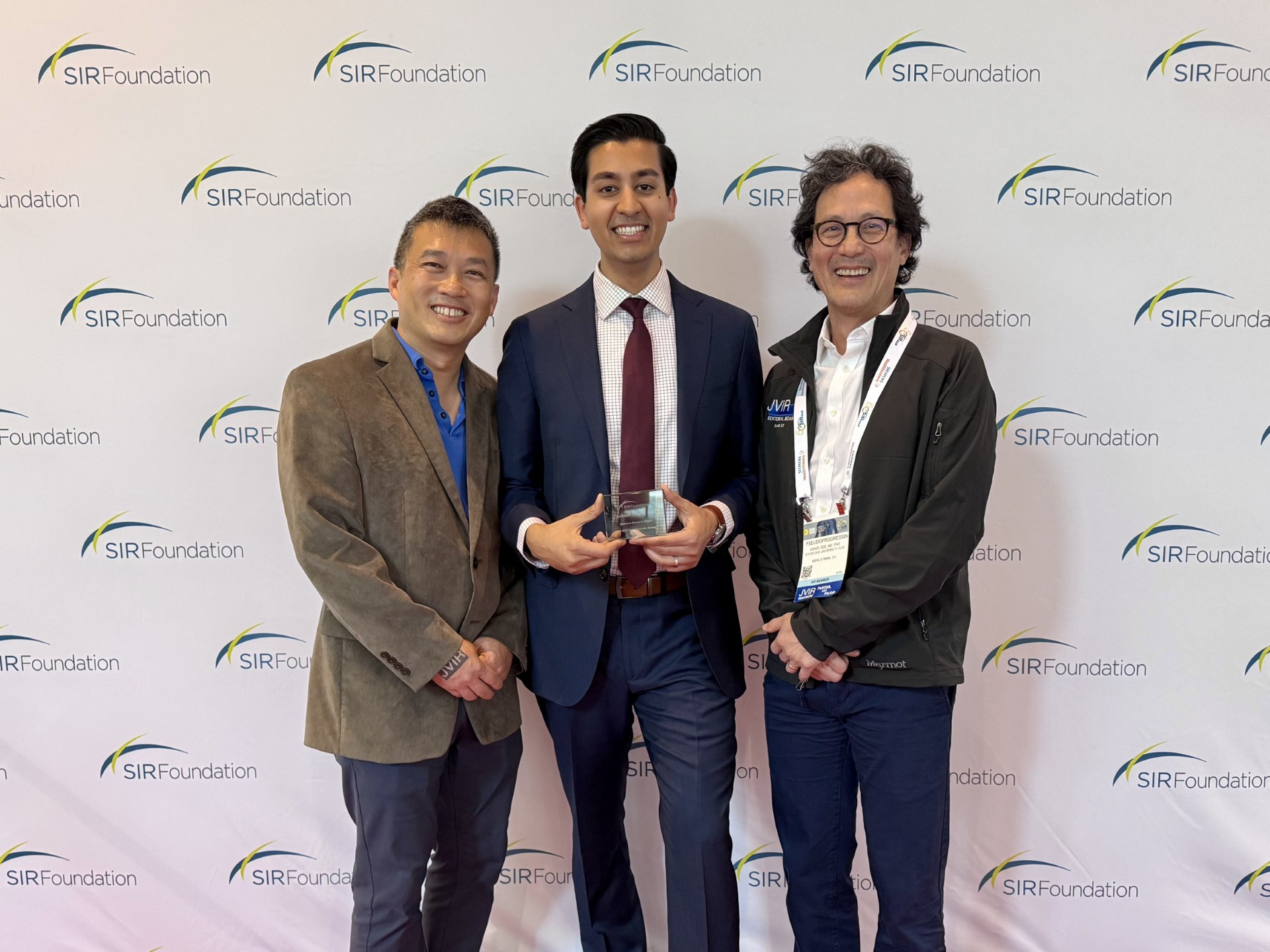
Inside access: Aakash Gupta, MD
Dr. Aakash Gupta discusses TEPS as an effective last-resort option for portal decompression for specific patient populations.
JVIR
![]()
Related articles
![]()
-
IRQ Research
Inside Access: Iwan Paolucci, PhD
A new study investigating stereotactic thermal ablation of malignant liver tumors has found that the technology is likely to be safe, effective and reproducible in the U.S. healthcare system.
-
IRQ Research
Inside access: Masao Yamamoto-Ramos, MD, EBIR
Masao Yamamoto-Ramos, MD, EBIR, discusses how recognizing compensated venous phenotypes could support more personalized follow-up and treatment strategies in interventional radiology
Inside Access Venous -
IRQ Research
Inside access: Steve Landers MBBS
Inside the 6-month results of a prospective case series investigating transarterial embolization for plantar heel pain.
Inside Access Pain Management -
IRQ Research
How to get published in JVIR
Tips for standing out in a highly competitive submission pool
JVIR IR research -
IRQ Research
How to get started in research
A successful researcher doesn’t necessarily need a PhD—but they do need a varied support network, a strong plan and a commitment to persistence.
IR research Research Funding: Awards Research Funding: Grants Women in IR -
IRQ Research
Inside access: Aakash Gupta, MD
Dr. Aakash Gupta discusses TEPS as an effective last-resort option for portal decompression for specific patient populations.
JVIR
Related articles