
Fall 2025
Foundation
GCAW
IR Quarterly
ABR IR/DR certifying exam resources
Results from an ECS survey
This article is a summary of findings from a recent Society of Interventional Radiology (SIR) survey conducted by the Early Career Section (ECS) in Fall 2025. Please note the resources detailed in this article are neither endorsed by the American Board of Radiology (ABR) nor the SIR as official prep resources and are only being reported as results of the survey. Full results of the survey, including a complete list of all reported study resources, can be found on the ECS website exam resource page.
Graduation from interventional radiology residency is an exciting time, marking the culmination of years of hard work and long hours finally coming to a conclusion. It is also a period of great change and new challenges as you quickly adapt to the roles of a new attending physician, striving to balance clinical, teaching, research and administrative duties, while simultaneously navigating financial, personal and professional changes within a new practice environment. On top of all that, you are faced with not one, but two final examinations in order to earn your certification in diagnostic & interventional radiology from the American Board of Radiology (ABR). Given the personal, professional and time constraints associated with board preparation, prioritizing high-yield resources will be essential for success.
The SIR Early Career Section (ECS) conducted a survey to evaluate the perceived value of common exam preparation materials used by recent ABR IR/DR certification examination test takers. Our goal is to reduce some of the stress associated with exam preparation by highlighting the most valuable resources identified by prior examinees.
Methodology
A brief survey was emailed to over 1,100 total ECS members in order to compile a list of commonly used and helpful study resources used in preparation for both the IR/DR computer-based exam and IR oral board exam. Respondents were asked about their training pathway (integrated IR, independent IR, alternate pathway or traditional VIR fellowship). They were further asked about the time interval between training completion and examination date(s), as well as the resources utilized in preparation for the exam.
To evaluate the perceived helpfulness of individual study resources, a list of common prep materials for each exam was assembled, with an additional option to share additional resources via free text responses. Respondents were asked to rate the helpfulness of each resource or indicate if they did not use that resource. For analysis purposes, helpfulness levels were assigned a numerical value on a scale of 1–5 (with 5 being most useful), and a weighted score was calculated based on the number of responses for each level.
Results
118 responses were received (approximately 11%). A few respondents declined to report their graduation date or training pathway. There was a near-even split among trainees who graduated from an IR integrated residency (33.3%), IR independent residency (35.9%) and VIR fellowship (28.2%), with a very small number of IMG alternate pathway graduates (Figure 1). Approximately 2/3 of respondents graduated in the 5 years preceding the survey (Figure 2).
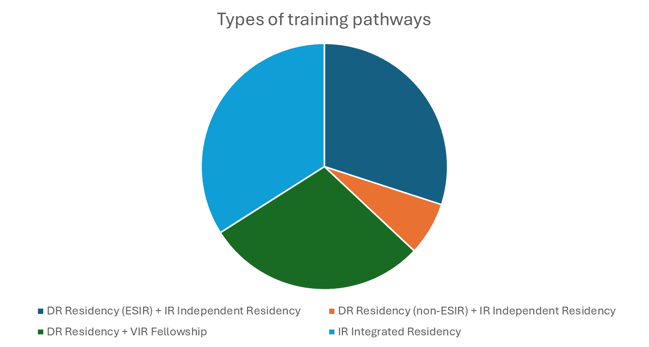
Figure 1: Types of training pathways from which survey respondents graduated.
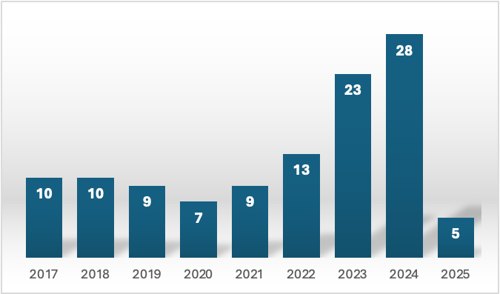
Figure 2: Distribution of graduation years of survey respondents.
Exam timing
Exam timing was variable among respondents, ranging from 0–6 years after graduation. Most completed the computer-based exam in the same year following completion of training and the oral exam 1 year after completion of training. The longest intervals were seen in respondents who completed the VIR fellowship training pathway and alternate pathway graduates. Post-2020 graduates did not report taking longer than 3 years to complete both portions of the certification exam.
Resources used and perceived value
For the IR/DR computer-based exam, the Board Vitals QBank received the highest weighted score (4.34 out of 5), followed closely by Vascular & Interventional Radiology: A Core Review (4.26) and the ABR Noninterpretive Skills Study Guide (4.02). For the IR oral board exam, the Case Review Series: Vascular & Interventional Imaging was rated most helpful resource (4.35). Oral board preparation, either structured within a training program or with the help of a coach or colleague (4.19 and 4.14, respectively), was also rated highly. The top 6 resources for each exam are presented in Figures 3 & 4.
|
IR/DR Computer-Based Exam |
|
|
Resource |
Weighted Score |
|
Board Vitals QBank |
4.34 |
|
Vascular & Interventional Radiology: A Core Review (Strife/Elbich) |
4.26 |
|
ABR Noninterpretive Skills Study Guide |
4.02 |
|
Radiologic Physics: War Machine (Lionhart) |
3.96 |
|
Crack the Core Review (Lionhart) |
3.84 |
|
RadPrimer QBank |
3.82 |
Figure 3: Most helpful reported resources for the IR/DR computer-based exam.
|
IR Oral Board Exam |
|
|
Resource |
Weighted Score |
|
Case Review Series: Vascular & Interventional Imaging (Saad et. al.) |
4.35 |
|
Oral Board Prep within training program |
4.19 |
|
Oral Board Prep with coach or colleague |
4.14 |
|
ABR Mock Oral Exam Video |
4.03 |
|
ECS/ABR Exam Update Webinar |
3.71 |
|
RadCases Q&A |
3.69 |
Figure 4: Most helpful reported resources for the IR oral exam.
Conclusion
We hope the information collected from this survey helps current and future graduates navigate the pathway to their initial ABR IR/DR certification. To all future graduates, the SIR ECS invites you to join our membership—we offer resources and support to all early career IRs as they navigate the transition to attending practice, including updates on the evolving changes to the certification exam process.
AUTHORS

Fiona Malone, MD

Marco Ertreo, MD

Jung Hyun Yun, MD

Moaz Choudhary, MD

Priya Mody, MD
Related Content
-
Article
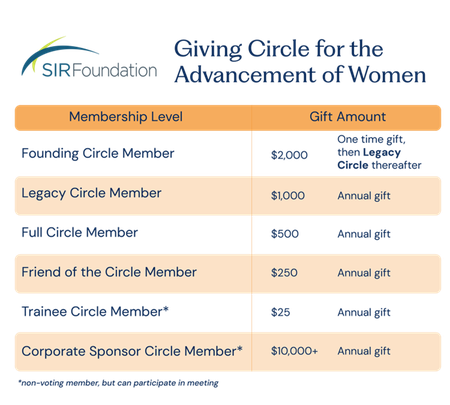
Join the circle
The Giving Circle for the Advancement of Women (GCAW) not only provides career development opportunities but allows individuals to come together to thoughtfully and intentionally donate.
-

How to match
It is no secret that the residency match process can be a very stressful time for medical students as competition, stress and a lack of control of the final outcome are at an all-time high
Resident-in-training
Underrepresented Minorities in IR
Fall 2025
Medical student
-
Article

The clinician scientist
The Research Track Residency pathway at the University of Pennsylvania recently received funding from the National Institutes of Health (NIH) enabling the program to expand its support of clinician scientist training to the IR/DR program.
Summer 2025
Research Funding: Grants
-
Article
![]()
The pediatric pathway
![]()
Gulraiz Chaudry, MD, MBChB, FSIR shares the challenges and opportunities of the current pediatric training pathway.
Winter 2024
Pediatric
-
Article

Beyond the angio suite
The lasting impact of mentorship in IR
Resident-in-training
Spring 2025
Mentorship
-
Article
![]()
Hire education
![]()
An overview of PAs, NPs, and RAs in interventional radiology
Nurse Practitioners and Physician Assistants
![]()
Related Content
![]()
-
Article
Join the circle
The Giving Circle for the Advancement of Women (GCAW) not only provides career development opportunities but allows individuals to come together to thoughtfully and intentionally donate.
-
How to match
It is no secret that the residency match process can be a very stressful time for medical students as competition, stress and a lack of control of the final outcome are at an all-time high
Resident-in-training Underrepresented Minorities in IR Fall 2025 Medical student -
Article
The clinician scientist
The Research Track Residency pathway at the University of Pennsylvania recently received funding from the National Institutes of Health (NIH) enabling the program to expand its support of clinician scientist training to the IR/DR program.
Summer 2025 Research Funding: Grants -
Article
The pediatric pathway
Gulraiz Chaudry, MD, MBChB, FSIR shares the challenges and opportunities of the current pediatric training pathway.
Winter 2024 Pediatric -
Article
Beyond the angio suite
The lasting impact of mentorship in IR
Resident-in-training Spring 2025 Mentorship -
Article
Hire education
An overview of PAs, NPs, and RAs in interventional radiology
Nurse Practitioners and Physician Assistants
Related Content